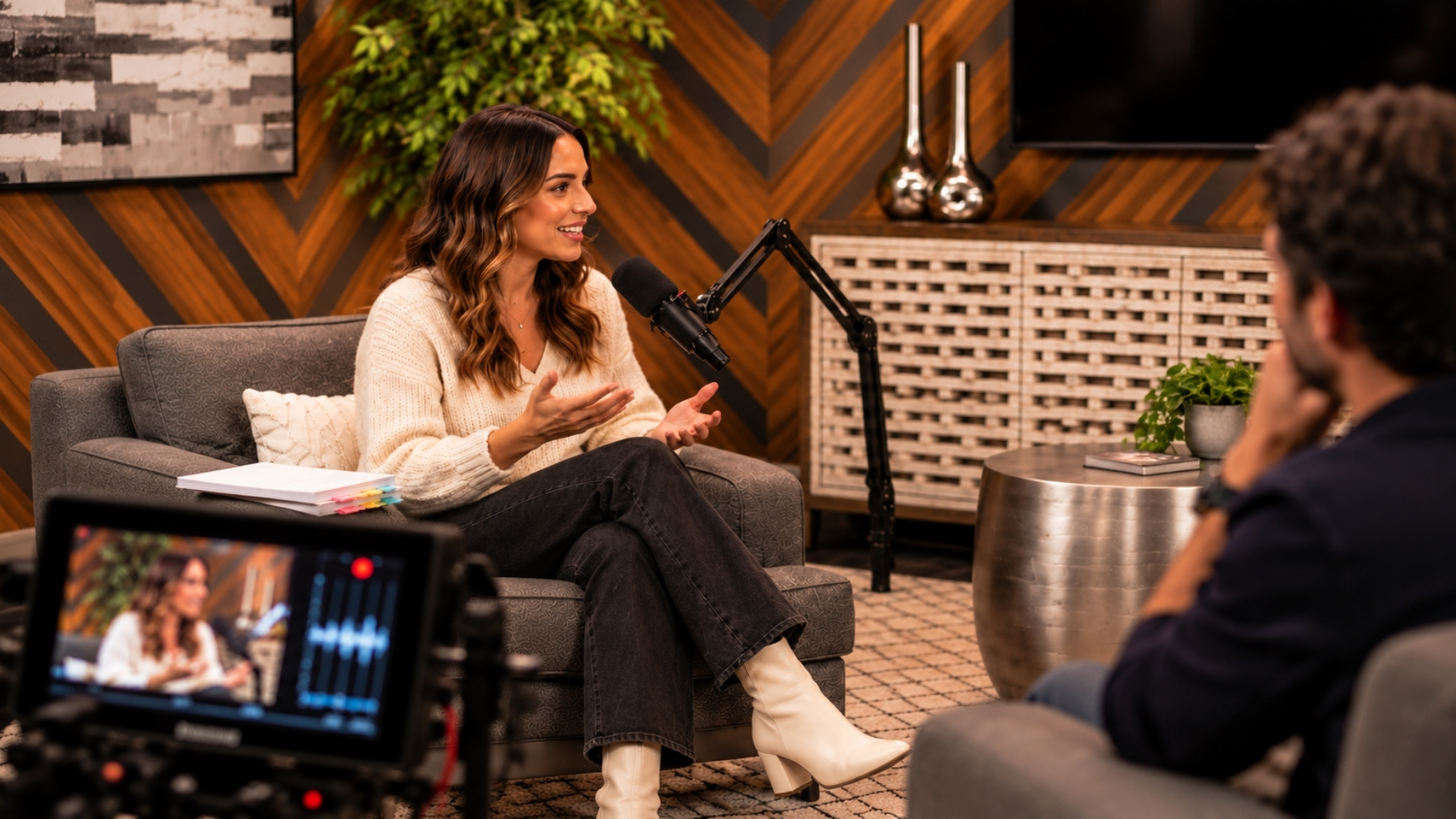
Video podcasts have swiftly evolved from casual audio recordings with webcam overlays into high-production corporate media assets. Whether launching a thought-leadership show, an internal executive broadcast, or an industry-focused interview series, professional production value directly shapes brand credibility. Building an in-house studio requires significant capital investment in acoustic treatments, cinema camera packages, specialized lighting grids, and sound isolation. Alternatively, utilizing a dedicated turn-key production space in North Scottsdale provides immediate access to broadcast-grade equipment without ongoing operational overhead.
Before pressing record on your next video podcast episode, run through this 7-point checklist to distinguish essential production criteria from unnecessary marketing hype.
1. Professional Acoustic Isolation & Treatment
Crystal-clear audio is non-negotiable; viewers will forgive minor visual flaws, but bad audio causes immediate drop-off. True studio spaces utilize decoupled sound walls and acoustic diffusion panels to eliminate HVAC rumble, exterior traffic noise, and hard-surface flutter echoes.
2. Multi-Angle 4K Cinema Camera System
Modern video podcasts demand multi-cam switching (host, guest, wide shot) to maintain dynamic visual pacing. Ensure your studio setup incorporates matched 4K cinema cameras with high-grade prime lenses to deliver shallow depth-of-field and consistent color science across all angles.
3. Studio-Grade Broadcast Microphones
High-end dynamic broadcast microphones paired with ultra-clean preamps capture rich vocal presence while minimizing room reflections. Desktop boom arms or concealed overhead mounts keep cables and bulky hardware out of the video frame.
4. Professional 3-Point Studio Lighting
Relying on ambient office light or overhead fluorescents causes harsh facial shadows and color distortion. A proper broadcast lighting layout uses key, fill, and hair lights with high CRI (Color Rendering Index) ratings, softened by large diffusion boxes to ensure natural skin tones.
5. Dedicated Multi-Track Audio & Video Recorders
Never rely solely on software streaming tools for primary capture. Recording isolated (ISO) audio and video tracks for each talent directly to hardware recorders provides maximum flexibility during post-production editing, color grading, and audio mixing.
6. Controlled Scenic Backdrops & Set Aesthetics
A clutter-free, intentionally designed background communicates polish. Modern sets feature warm accent lighting, acoustic wood slatted paneling, and subtle branding elements that complement the host without distracting viewers.
7. Experienced Technical Director & Sound Engineer
The single biggest factor in stress-free recording is on-site technical support. Having a dedicated studio engineer handling live video switching, audio leveling, and file management allows hosts to focus entirely on guiding engaging conversations.
Summary
Achieving a broadcast-quality video podcast requires harmonizing technical precision with a comfortable recording environment. By verifying these seven criteria, corporate leaders and content creators can reliably produce top-tier media that elevates their brand authority.